- Doors
- Commercial
Commercial Doors in Tulsa: What Businesses Should Know Before Replacing an Entrance
Storefront systems, the hardware that actually fails first, ADA basics, and how a business entrance differs from a house door.

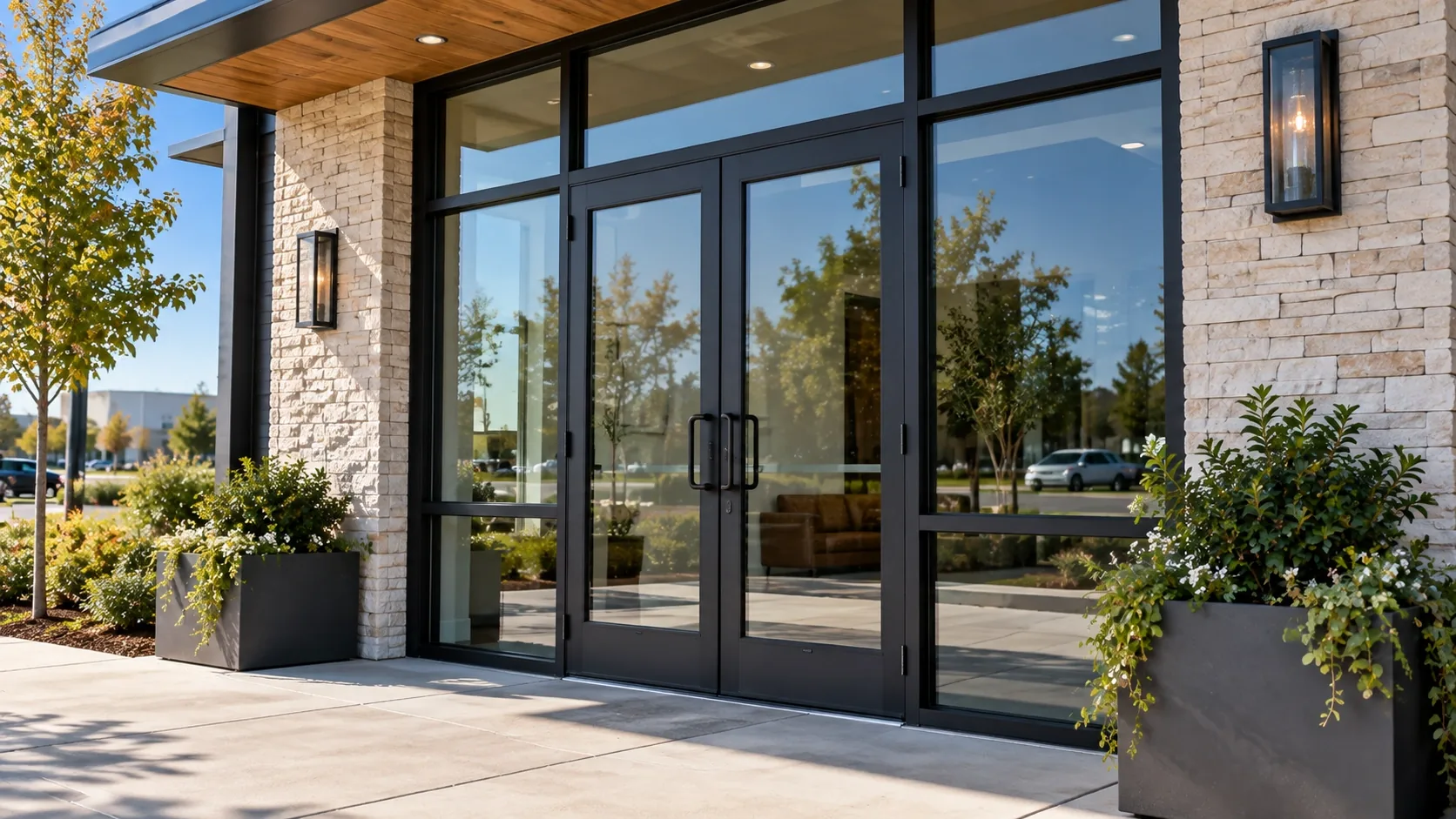
A commercial entrance is a different animal from a house door. A busy Tulsa storefront can take more open-and-close cycles in a month than a residential front door sees in a year, and it has to do that while staying weather-tight, meeting code, and looking presentable to every customer who walks through it. When one fails, it fails publicly.
Morgan Windows installs and replaces commercial doors across Tulsa and Northeastern Oklahoma: aluminum storefront entrances, hollow metal service doors, and the hardware that makes either one last. Here is what actually matters when you are specifying one.
The Main Types of Commercial Door
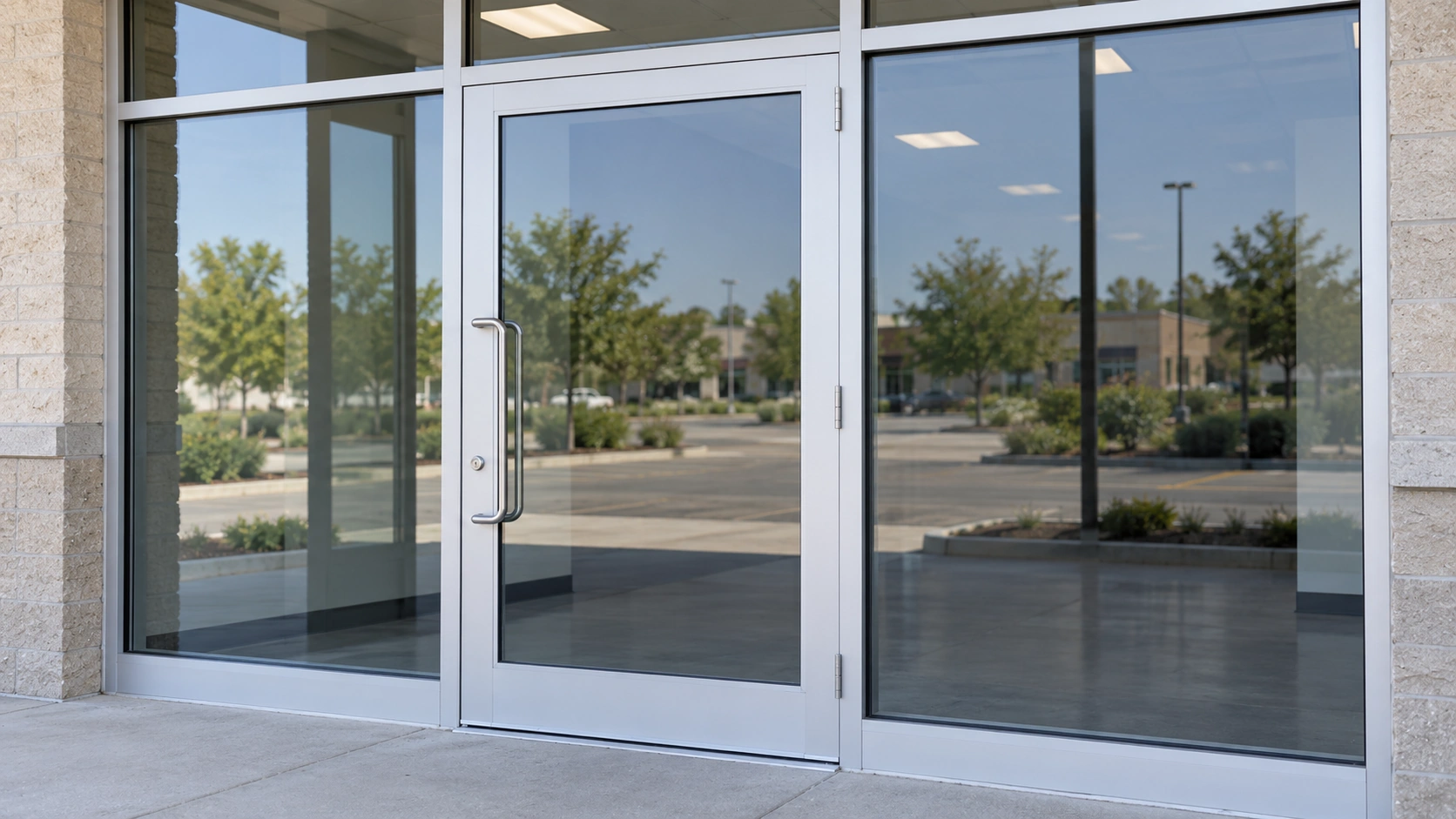
Aluminum storefront doors are the glass-and-aluminum entrances on most retail and office fronts. They are light, they show off the space, and they are built around a frame system rather than a slab. Narrow, medium, and wide stile options change how much aluminum frames the glass, and wider stiles accept heavier hardware and take abuse better on a high-traffic entrance.
Hollow metal doors are the steel doors on back entrances, service corridors, and utility rooms. They are built for security and durability, not appearance, and they carry hardware that a lighter door cannot.
Commercial-grade fiberglass or steel entries sit between the two, and suit offices, clinics, and small professional buildings that want a residential look with commercial durability.
Which one belongs on your opening depends less on preference than on traffic, security, and what the frame will carry.
The Hardware Is What Actually Fails
On nearly every commercial door service call, the door itself is fine. The hardware is what wore out.
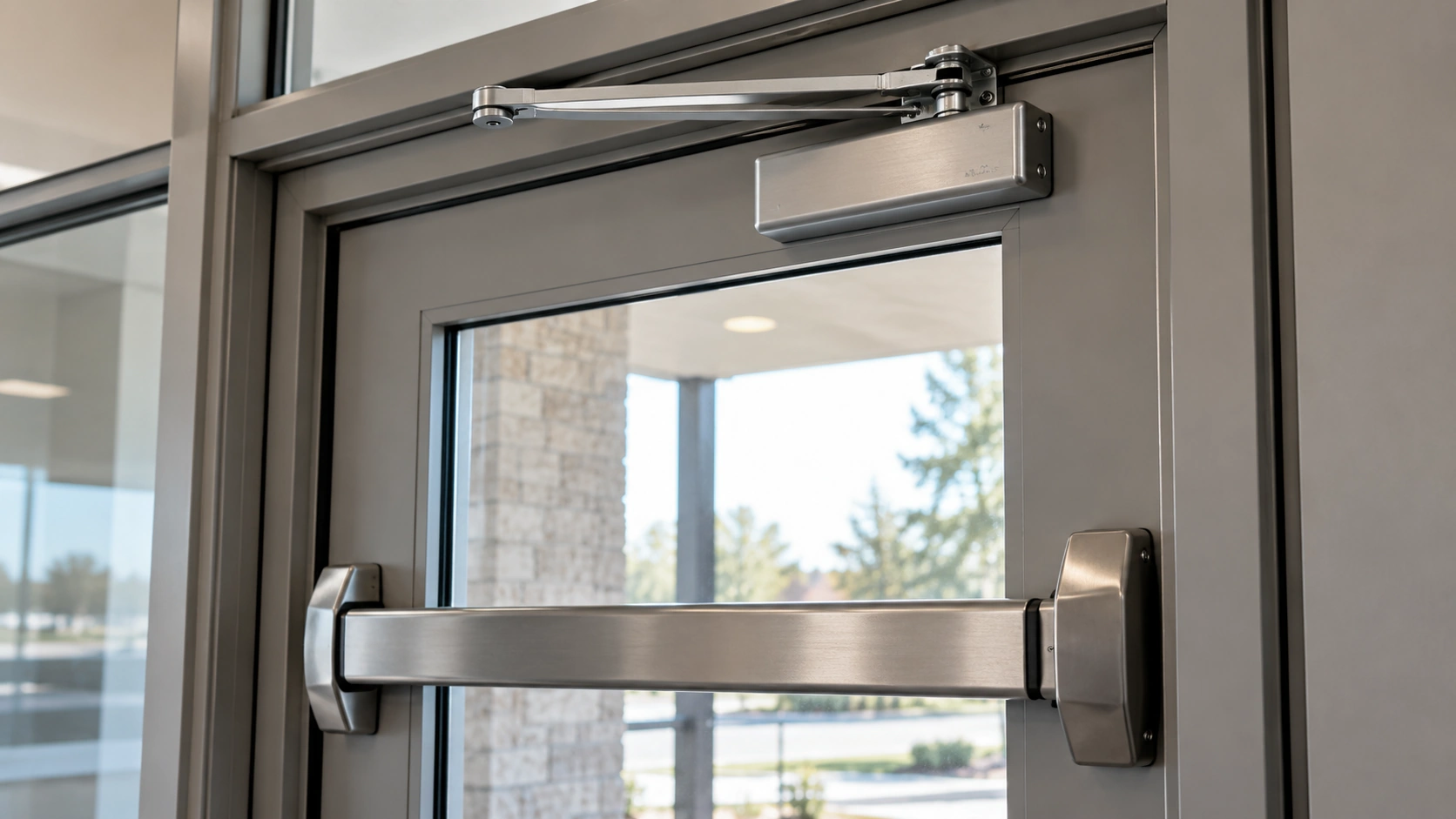
Closers take the most abuse. A closer controls how the door shuts, and when it goes out of adjustment the door either slams or fails to latch. In Oklahoma wind, a failed closer on an exposed entrance turns into damaged hinges and a bent frame quickly.
Pivots and hinges. Storefront doors often ride on pivots rather than hinges. Worn pivots let the door drop, which makes it drag on the threshold and stop latching square.
Locks and exit devices. Panic hardware, or an exit device, is the push bar that lets anyone out in a single motion. If your door serves a required exit, this is code, not a preference.
Thresholds and weatherstripping. The wear items nobody notices until the entry is drafty, wet after a storm, or leaking conditioned air all August.
Here is the practical takeaway: if your frame is straight and your glass is intact, a door that sticks, slams, or will not latch is usually a hardware repair, not a replacement. That is a much smaller invoice, and we will tell you when that is what you are looking at.
When Replacement Is the Right Call
Replace rather than repair when:
- The frame is racked or corroded and the door no longer sits square in it
- The door has been forced or damaged in a break-in attempt
- You are repeatedly repairing the same opening
- The glass or the thermal performance is failing and the entry is driving your heating and cooling costs
- The entrance no longer meets accessibility requirements you need it to meet
That last one deserves attention. Accessible entrances have requirements around opening force, maneuvering clearance, and hardware you can operate without tight grasping or twisting. Lever handles and push bars satisfy that; round knobs generally do not. The ADA’s official guidance is the authority, and your local building official has the final say on your specific building.
What a Commercial Door Costs in Tulsa
Straight answer: we quote commercial doors per project rather than from a range, and any company that gives you a firm number over the phone is guessing. Residential door installation runs $2,500 to $4,000 at Morgan Windows, but commercial pricing moves on variables a house door does not have: stile width, glass type, closer and exit device specification, frame condition, whether the opening needs to stay usable during business hours, and lead times on aluminum and specialty hardware.
What we will do is come look at the opening, tell you honestly whether you are facing a hardware repair or a replacement, and put a written number in your hands with the hardware spelled out line by line.
Why Local Matters More on Commercial Work
When a storefront entrance fails, it is not an inconvenience, it is a door your customers cannot use. Response time is the whole game, and that is an argument for a local company over a regional one that routes service calls through a queue.
We are based in Catoosa and work throughout the Tulsa metro, so we can get eyes on a commercial opening quickly. We also handle commercial window replacement, which matters if you are refreshing a whole storefront rather than one door.
Get a Commercial Door Quote
Whether you are replacing a tired storefront entrance, adding proper exit hardware, or just tired of a door that will not latch, the first step is the same. Call Morgan Windows at (918) 400-2326 or request a free on-site estimate. We will assess the opening and the hardware, tell you if a repair gets you a few more years, and give you a written price either way.
We are a locally owned Oklahoma company serving Tulsa, Broken Arrow, Owasso, Claremore, and the surrounding metro, and every door installation we do carries our 5-year workmanship warranty.